
I recently re-read Marie Kondo’s classic book: The Life-Changing Magic of Tidying Up. I often feel overwhelmed looking around my home; Books, toys, paperwork, dirty dishes. It’s a never-ending process of shifting stuff about.
I suspect this is something many of us reflect upon often and so I thought it was worth revisiting the key principles and methods outlined in the book, as well as a deeper look into the philosophy behind the KonMari Method and its impact, on our wider lives.
Introduction to the KonMari Method
Marie Kondo’s The Life-Changing Magic of Tidying Up introduces us to a minimalist approach to decluttering that goes beyond simple cleaning techniques. Kondo’s method, known as the KonMari Method, is centered around the idea of retaining only those items that “spark joy” in our life. This criterion for keeping or discarding items is unique to her method and reflects a deeper, more introspective approach to tidying than traditional methods.
The Philosophy of Tidying Up
Kondo’s book is as much a guide to decluttering one’s physical space as it is to clearing mental clutter. She argues that our possessions reflect our state of mind and that by tidying our physical space, we can achieve a clearer, more focused state of being. The process of sorting through and discarding items forces us to confront our attachments and habits, leading to personal growth and self-discovery.
Step-by-Step Guide
Kondo emphasises the importance of a category-by-category system over a room-by-room approach. This systematic method ensures that all items of a particular type are considered together, making it easier to identify duplicates and unnecessary items. The prescribed order is crucial, starting with clothes, then moving on to books, papers, komono (miscellaneous items), and finally, sentimental items. This progression is designed to hone the individual’s decision-making process regarding what truly brings joy.
Clothes
For clothes, Kondo suggests gathering all clothing items in one place to fully comprehend the volume and then handling each item individually to determine if it sparks joy. Her unique folding technique, which allows clothes to be stored upright, maximizes storage space and visibility.
Books and Papers
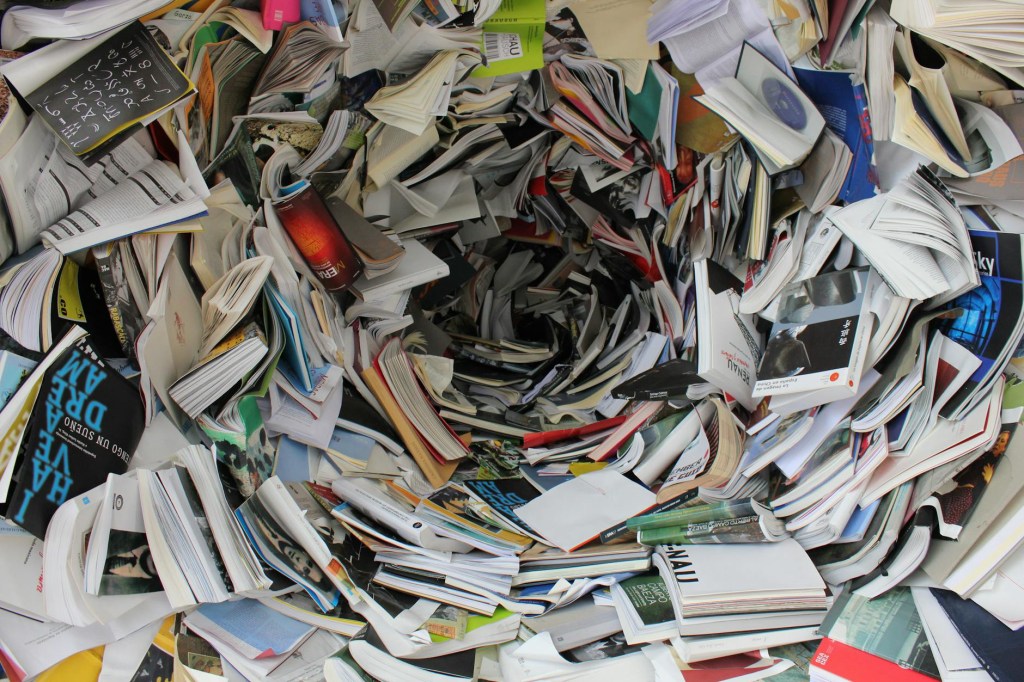
Kondo’s approach to books and papers can be challenging for some, as she advocates for a significant reduction. Her stance is that these items often serve more as comfort or as symbols of the person we wish to be, rather than items that truly bring joy or are frequently used.
Miscellaneous Items and Sentimental Items
As the tidying process progresses to more complex categories like komono and sentimental items, we are better equipped to make decisions about what to keep. Kondo suggests treating items with respect and gratitude, even when letting them go.

Impact Beyond Tidying
Kondo explores the impact of a tidy space our mental health, relationships, and overall well-being. A decluttered space can lead to improved focus, reduced stress, and a more serene environment. She shares testimonials from clients who have experienced profound changes in their lives as a result of adopting her method, from improved relationships to career advancements.
Critique and Final Thoughts
While Kondo’s method has gained a massive following worldwide, it is not without its critics. Some argue that her approach is too extreme or impractical for certain lifestyles. However, the core principles of the KonMari Method—intentionality, mindfulness, and respect for one’s possessions—have universal appeal.
Marie Kondo’s The Life-Changing Magic of Tidying Up offers more than just a tidying manual; it presents a philosophy towards living with less but cherishing more. The book prompts us to reconsider our relationship with our possessions and, by extension, our relationship with ourselves and our environment. Through a meticulous yet joyful process, Kondo guides us towards not just a tidier home, but a transformed life.

Thank you
MyWellnessDoctor.co.uk
 My Wellness Doctor
Leave a comment