By Dr Michael Simmons,
GP & Longevity lead at MyWellnessDoctor.co.uk
Ageing is a complicated process.
But not in the way we’ve been taught to think.
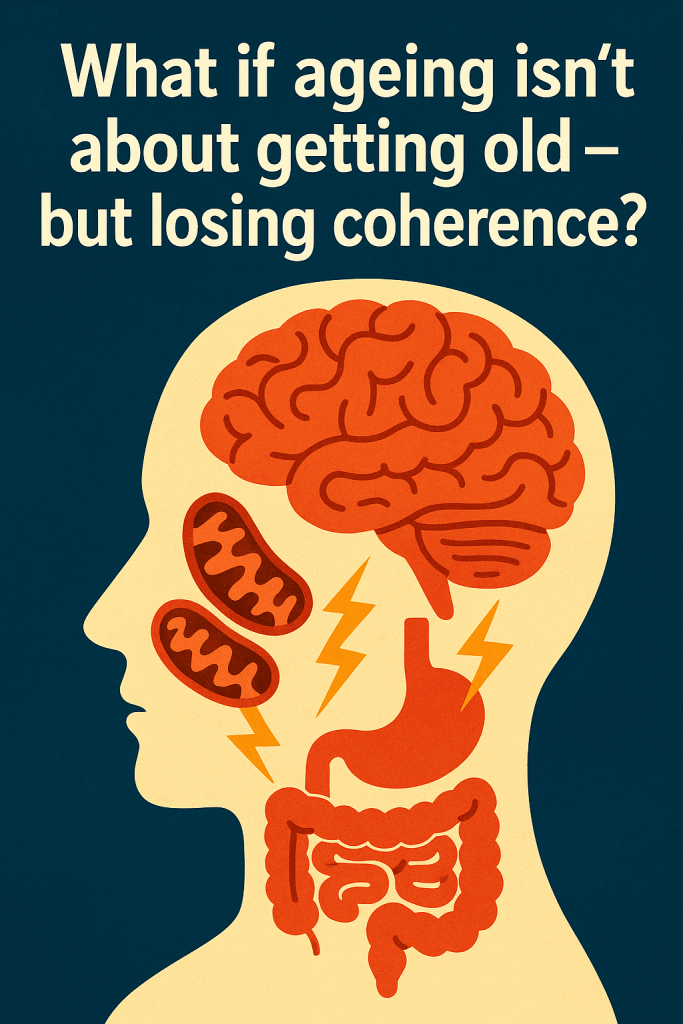
Emerging evidence suggests something deeper is happening, something that looks less like a slow decay, and more like a breakdown in communication across the systems that keep us alive
In fact, the biggest shifts in longevity research right now aren’t focused on single organs or diseases at all. They’re looking at how mitochondria, the gut microbiome, our immune system, and ageing brain all start to unravel, together. And crucially, how these parts of us don’t age independently, instead they drag each other down.
Let’s look at what this new picture of ageing is showing us.
1. Your Cells Know When to Die… But Sometimes, They Refuse
In your youth, damaged cells usually die quietly and get cleared out. As you get older, some of those cells stop dividing, but instead of going peacefully, they stick around and cause trouble. Scientists call them senescent cells. Sometimes referred to as “zombie cells.”
They leak toxic signalling chemicals that can damage nearby cells, trigger inflammation, and push other cells into the same zombie-like state. This inflammatory cocktail (called the SASP) doesn’t stay local, but circulates in your body, quietly driving the ageing process.
The good news is that we are learning how to clear them out.
Early trials in mice and humans have shown that certain combinations of plant compounds and cancer drugs (like quercetin and dasatinib) can selectively push these senescent cells to self-destruct. These treatments are called senolytics, and while we’re still in early days, they offer a glimpse of something remarkable: that ageing may not be irreversible.

2. The Aging Brain Runs Out of Fuel
Mitochondria play a central role in ageing biology due to their involvement in ATP production, ROS regulation, and apoptotic signalling. Their functional integrity is particularly critical in the brain, given its high energy demand and sensitivity to metabolic disturbance.
As we age, mitochondria start to falter. They produce less energy & start generating waste products that cause even more cellular stress. This metabolic slowdown is now seen as a likely cause, not a consequence, of neurodegenerative diseases like Alzheimer’s and Parkinson’s.
Researchers are now investigating whether introducing functional mitochondria into compromised tissues may restore bioenergetic capacity. Some experimental approaches involve direct mitochondrial transplantation, while others focus on repurposing existing compounds, including nitric oxide donors and 5α-reductase inhibitors (used to treat symptoms related to an enlarged prostate) , to stimulate mitochondrial function through indirect signalling pathways.
It’s early, but there is the potential that we could restore energy so so perhaps, restore cognition.
3. Your Gut Microbiome Isn’t Always on Your Side
We hear a lot about probiotics and “good bacteria.” But surprisingly: as we age, the microbiome that once helped us digest food and fend off infections can start turning against us.
After age 50 or so, the helpful species start to decline. More aggressive, self-serving microbes take over. They slowly damage the gut’s protective lining which can allow larger particles, or even pathogens to leak into the bloodstream, triggering low-grade, system-wide inflammation. This process is coming to be known as “inflammaging.”
Interestingly, recent research suggests this whole shift may be downstream of the ageing immune system. In other words, it’s not just your gut changing your body. It’s your body losing control of your gut.

4. Postbiotics: The Clean Way to improve your Gut.
What if we could skip the bacteria and go straight to the benefits?
That’s the idea behind postbiotics, the useful molecules your gut bacteria produce when they’re doing their job well. These include things like butyrate (which protects the gut wall), urolithin A (which helps clean up mitochondria), and other signalling molecules that help regulate metabolism and inflammation.
Some postbiotics are already available as supplements, and early trials suggest they may improve muscle strength, lower inflammation, and even help manage conditions like type 2 diabetes or osteoarthritis. They’re shelf-stable, safer, and potentially more predictable than probiotics. Think of it like a precision gut support, with less unpredictability.
5. Keep Your Brain & Immune System Young
In a large UK study, scientists used blood tests to estimate the biological age of different organs. They discovered that People whose brains and immune systems looked biologically younger had dramatically lower risk of death, up to 56% lower.
Notably, youthful hearts, lungs, or livers didn’t offer the same survival advantage.
This suggests that the brain and immune system may act as coordinators of systemic ageing. When they start to decline, the rest of the body follows. When they stay healthy and functioning well, the rest follows.
What This Means in Practice?
Ageing is not confined to a single organ or pathway. It emerges from interacting changes in metabolic efficiency, immune signalling, inflammatory tone, and tissue repair capacity, often sustained by biological feedback mechanisms.
When cerebral energy metabolism declines, immune signalling becomes dysregulated. Compromise of the intestinal barrier leads to increased systemic inflammation. In parallel, accumulation of senescent cells reduces cellular adaptability and contributes to a chronic pro-inflammatory state.
But these loops can be interrupted.
1. Senolytics may reset inflammatory signalling.
2. Mitochondrial enhancers may restore energetic clarity.
3. Postbiotics may reinforce gut–immune balance.
4. Lifestyle factors—exercise, sleep, plant-based nutrition still matter, perhaps even more now that we understand the mechanisms they support.
So, what are the take-home messages?
Maybe aging isn’t so much about getting old, rather it’s a process of losing coherence?
This is The question posed by these new findings. And if that’s true, then our best chance at longevity won’t come from targeting isolated diseases, but instead, from supporting the underlying systems that keep the body in sync.
—
Interested in how this applies to your own health? At My Wellness Doctor, we help you explore tailored strategies that go beyond symptom management, supporting energy, resilience, and healthy ageing from the inside out.
 My Wellness Doctor
Leave a comment